

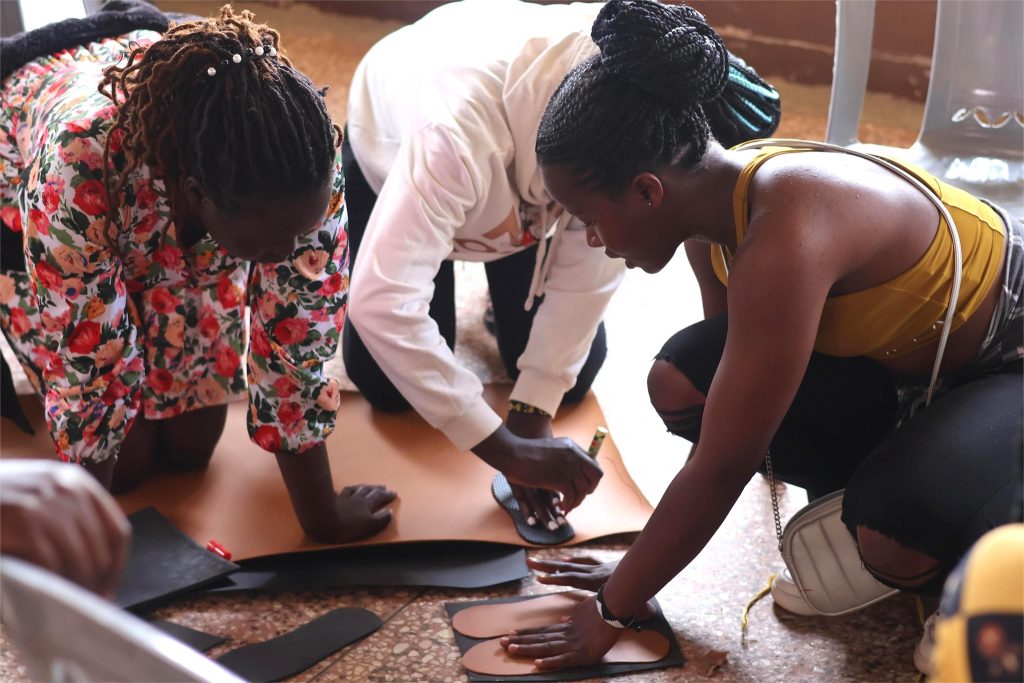
On 13 May 2025, during an official visit by Hand in Hand Kenya to Maisha Girls Safe House, a First Aid Training for Safe Sisters was organised and conducted at the Viwandani Safe Space. The activity formed part of the partner engagement visit and reflected a shared commitment to survivor empowerment, safety, and practical capacity-building.
The training was facilitated by Wren and Maddison, volunteers from Hand in Hand Kenya, and brought together 19 young women and girls, all members of Maisha’s Safe Sisters network and survivors of gender-based violence. The session aimed to equip participants with life-saving first aid skills to enhance their personal safety and enable them to support others within their households and communities.
During the training, participants received hands-on instruction on responding to common emergencies, with a focus on first aid for choking and nosebleeds. The facilitators guided the Safe Sisters through age-appropriate responses for choking, including care for infants, children, adults, pregnant women, and unconscious victims, with emphasis on correct technique, safe positioning, and when to seek emergency medical support. Practical demonstrations using mannequins, paired exercises, and group discussions ensured that participants could practice skills in a supportive environment.
The session also covered effective management of nosebleeds, with participants learning correct steps such as sitting upright, leaning forward, applying firm nasal pressure, and using cold compresses. Common misconceptions were addressed and corrected through hands-on practice and guided feedback.
Beyond technical skills, the training reinforced confidence, leadership, and a sense of responsibility among the Safe Sisters. Participants expressed increased readiness to act calmly during emergencies and a strong desire to share their knowledge within their families and communities, positioning them as agents of safety and care.
This activity demonstrated the value of integrating practical skills training into partner visits, ensuring that collaborations translate into tangible benefits for survivors. Through partnerships such as this, Maisha Girls Safe House continues to strengthen survivor resilience, agency, and community-based protection mechanisms